

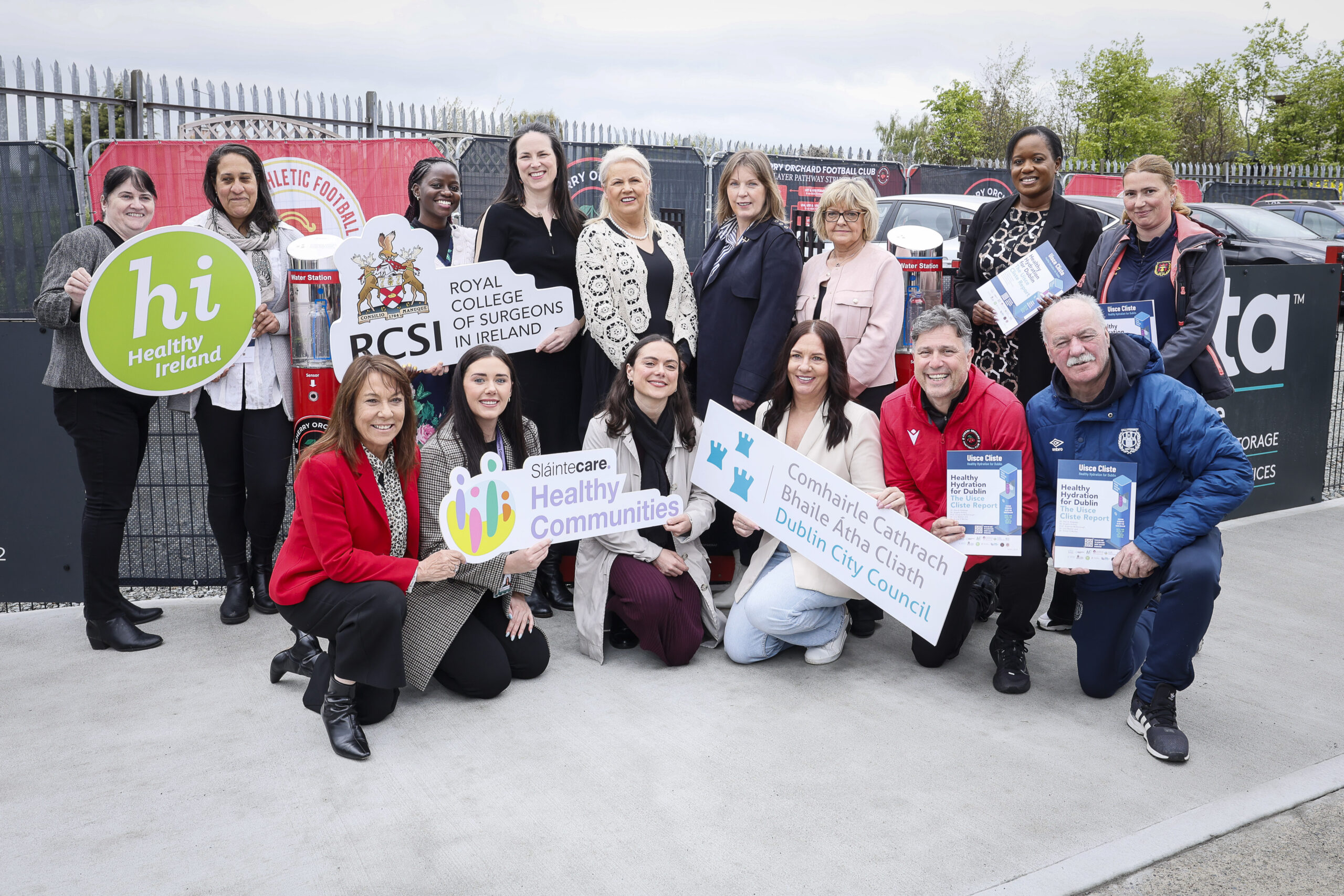
Cherry Orchard FC also received Uisce Cliste recommendations for their tuck-shop, educational materials and nine face-to-face education sessions for children, adolescents and adults.
Following this, hydration-related knowledge and habits improved among children and parents by 17% and over 900 litres of water were drunk during the short study period. Startlingly, there was a 97% reduction in usage by players of single use plastic bottles, aluminium cans and coffee cups.
Launching the report, Jennifer Murnane O’Connor, Minister of State at the Department of Health, said, “This report reinforces that access to clean drinking water is not only a basic right, but a powerful lever for improving public health. Through authentic community collaboration and targeted interventions, we can support education and find solutions to community challenges. With evidence-based policy we can enhance the built environment to make healthy choices much easier in order to improve health, reduce waste and advance health equity across disadvantaged areas.”
Stephen O’Brien, underage chairperson at Cherry Orchard FC said he was proud of the Uisce Cliste project because the practical measures “allowed us to make a real impact on the health of our members.”
Joanna Kelly works with Dublin City Council as its local development officer for Cherry Orchard Ballyfermot and she was Uisce Cliste’s project leader. She said the report shows “the real impact of working directly with communities and stakeholders to design meaningful, evidence-informed interventions. It highlights how public realm improvements, combined with education, can drive positive long-term health outcomes in our neighbourhoods.”

The research for the report was conducted by Dr. Grace O’Malley, Dr. Desire Naigaga, Dr. Angela Hickey, Dr. Lisa Mellon and Prof. Suzanne McDonough of RCSI University of Medicine and Health Sciences. The project was a collaborative effort between RCSI University of Medicine and Health Sciences, Dublin City Council, and the Sláintecare Healthy Communities Programme, as part of the Dublin City Healthy Ireland Strategy 2022–2025, funded by the Department of Health.
To find out more, visit: https://healthyhydration.eu/
* You can read the 46-page Uisce Cliste report here: https://indd.adobe.com/view/794f33f2-ea57-49b2-9e93-14a5bfbb4c62
Free public water should be available everywhere, argues Grace O’Malley


