
“We are heading towards more equality among migrants, Travellers, Irish, non-Irish, blended families, foster families, children in care, because they’re now all equally deprived and suffering,” she said.
“We have had a 300% increase in the last five years of children going into care. A 500% increase of migrant children and Traveller children going into care. So, we are breaking up families and the state is having to deal with that,” she said, speaking at the Social Inclusion Forum 2025 which was held on May 8 in Croke Park.
“Children in care are the most vulnerable children you can imagine. They are really suffering and you need to do more,” she appealed.
Forum disappointment
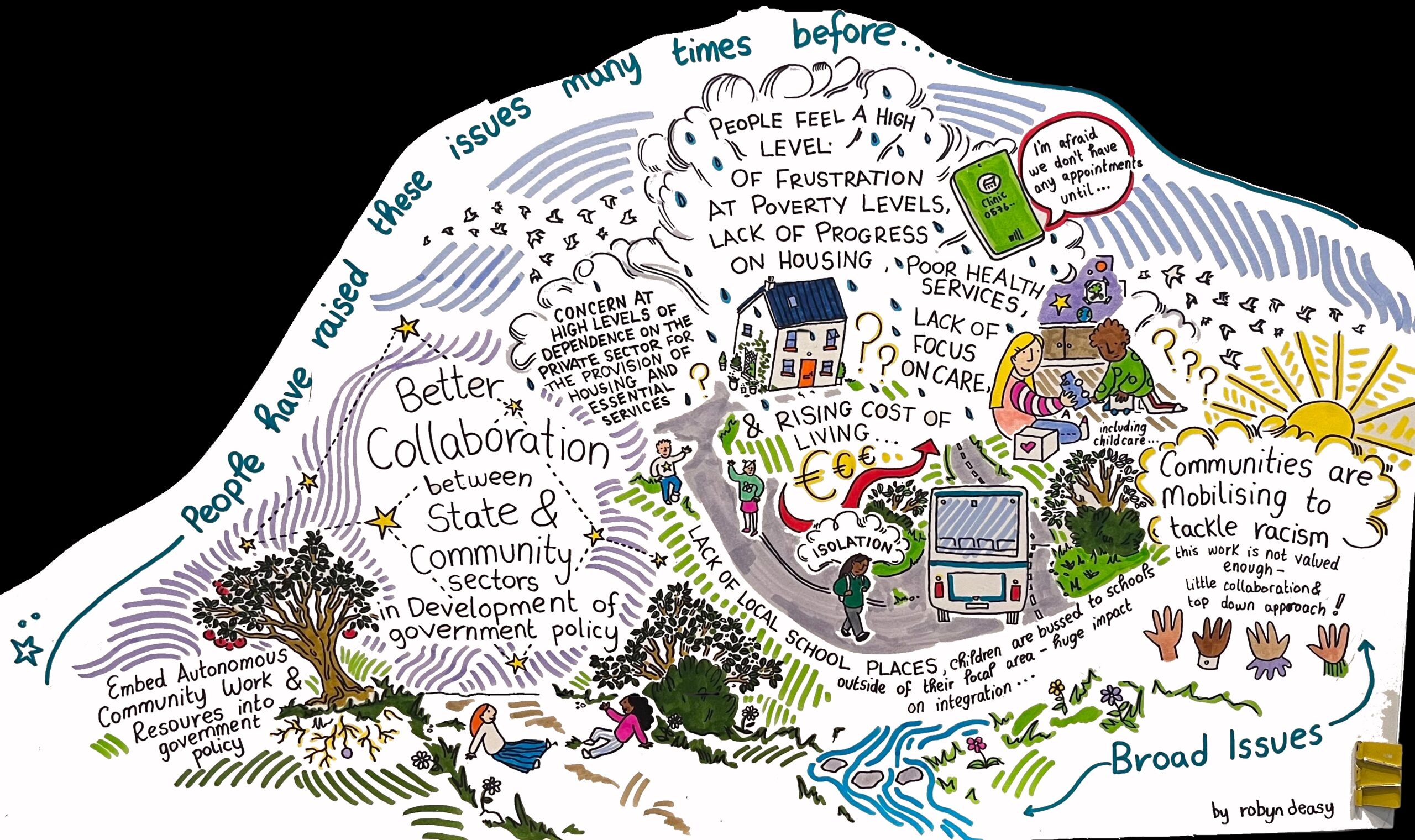
Voices from the floor indicated a loss of patience with the government. Things are worse now than they were in 2007, said one speaker pointing to the number of babies being born into homelessness in Dublin in 2025.
“I was one of the unfortunate people who were so excited when you sent out that huge survey on the cost of disabilities. I helped over 180 people to fill it in, me and other volunteers,” she recalled.
“And then we were told, we’re actually going to support people with disabilities, to give them an opportunity to participate, to contribute and actually have a real existence.
“We were given that little bit of hope, and then nothing happened, nothing changed. There is no real vision for what you’re going to do, because the poverty trap is entirely created by the state, and this is part of the problem.
“We’ve got the highest number of babies born into homelessness just down the road.
“I don’t see the change, I don’t see the vision. I look forward to having a report, but I’ve been coming to these since 2007, and it’s worse now than it was in 2007. I’m probably one of many who’s really disappointed,” they said.
Islander’s message on week of tragedy
In the same week that an islander lost his life on a pier on Clare Island, Megan O’Malley travelled from the island to Dublin to deliver a call at the forum for better infrastructure to make life safer and less isolated for all living on Ireland’s offshore islands.
She said, “During winter we put our lives at risk every day trying to get out to get food, water, baby’s nappies, new clothes, school items, everything.
“We know all too well what it’s like to be isolated and not be able to get the services in in time when they’re needed in an emergency,” she added.
End discrimination in state services
Kathleen O’Connor works as a primary healthcare co-ordinator in Co. Wicklow and is appalled at the lack of progress. She said, “Travellers are living in substandard accommodations, ten years after the Carrickmines tragedy that took the lives of ten of our people from our community.”
She highlighted poor pay and conditions in the sector and a lack of pension support for some staff. Traveller primary healthcare workers and their communities face daily racism and discrimination, including “a lot of barriers” against Travellers seeking to access services.
“It’s very hard as Travellers to go into a service even and then to go in and being discriminated against which makes it even harder. So we do try to work with that as well but that’s what we’re facing every day,” she said.
Guest speaker’s gratitude for community work
Guest speaker, author and lecturer Katriona O’Sullivan, said, “Poverty and inequality robs you of connection. And that is something that we all deserve to have.”
“I grew up in a home where both of my parents were heroin addicts. I woke up every single day hungry and not just for food. I hungered for a hug, for someone to teach me how to regulate myself, for someone to tell me that I was worth more.”
She went on to describe support she received from, among others, a community worker called Joe and it made a difference.
“He guided me towards the two really important things that changed my life, therapy and education,” she said, adding that good policies and support services can help people to rise above poverty.


